
THE MEUSE LIZARD · top predator of the last dinosaur seas
Hand-Painted Detail
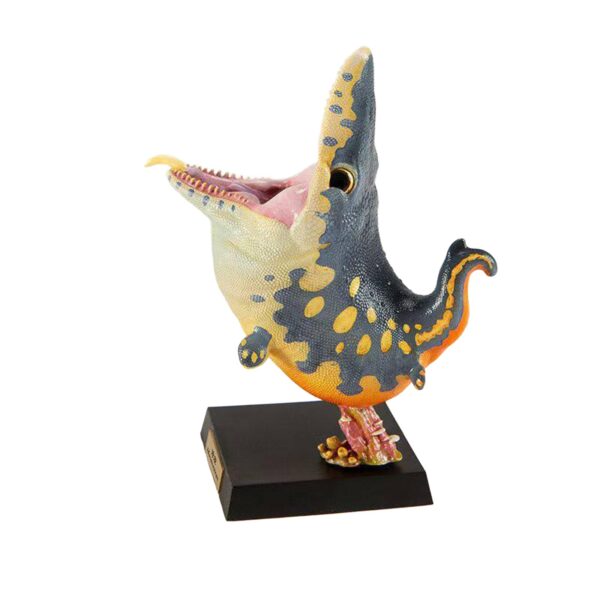
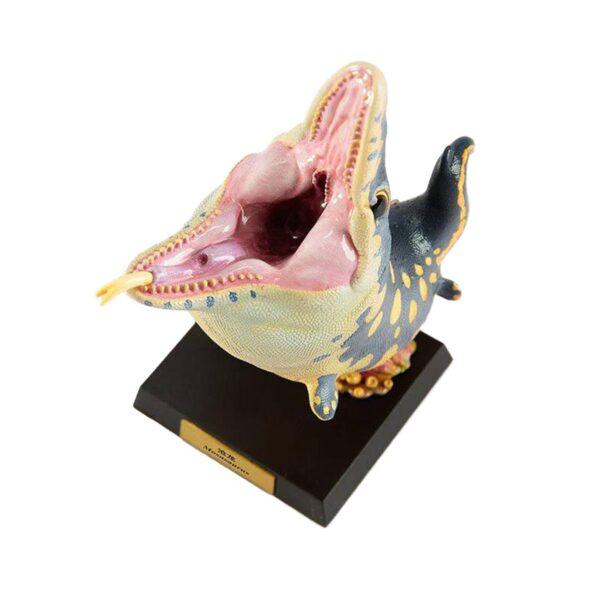
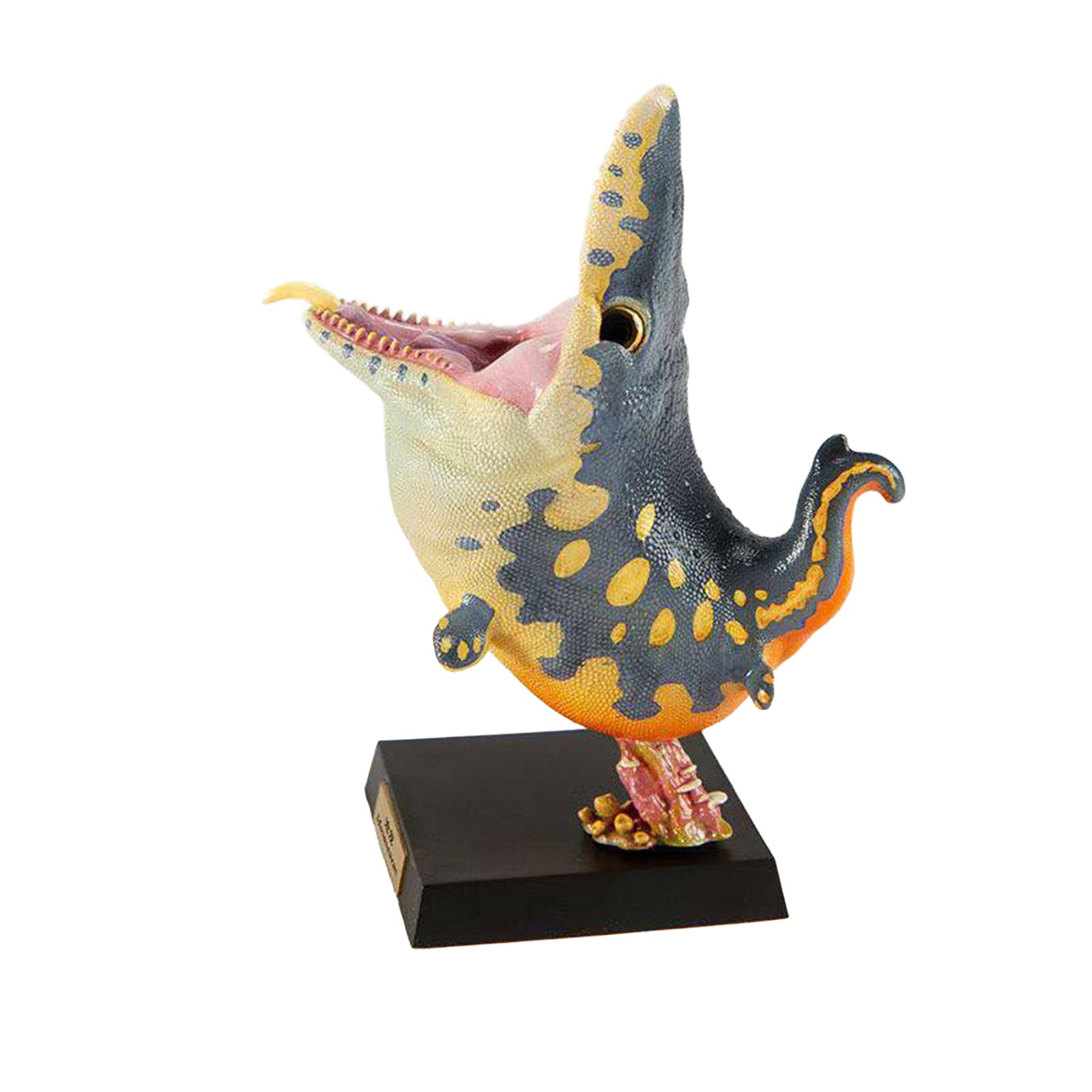
Every scale, feather and marking is painted by hand to match the real animal — so detailed up close, so charming on the shelf.
Ready to Display
A single, sturdy piece — no assembly, no fuss. Set it on a desk or shelf and it holds its pose, ready to collect and show off.
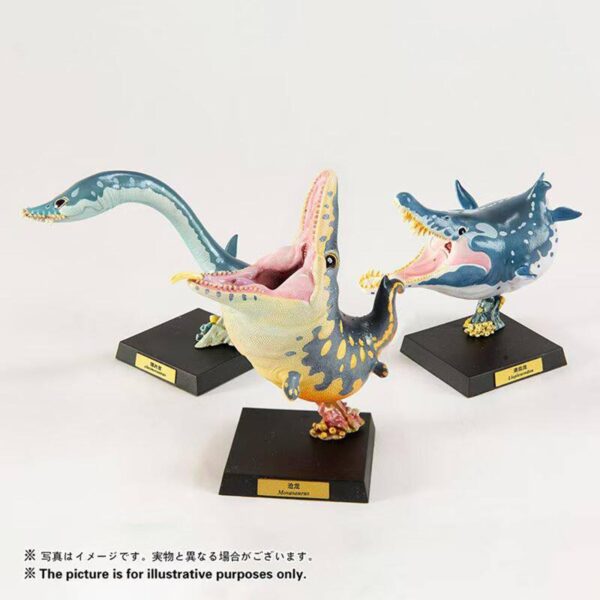
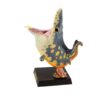
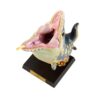
Mosasaurus wasn’t a dinosaur — it was a gigantic sea-going lizard, part of the same big family as today’s monitor lizards and snakes, and it ruled the oceans right up to the end of the Cretaceous. Our figure points its long snout skyward, jaws flung open and forked tongue flicking out, with a slate-blue back splashed in golden spots and a sunset-orange belly.
Named for a River
Mosasaurus means ‘Meuse lizard,’ after the Meuse River at Maastricht in the Netherlands, where its fossils were dug from chalk quarries in the 1700s.
A Fossil Taken as a Prize
When French troops took Maastricht in 1794, they carried the famous skull off to Paris. An old story says soldiers were paid 600 bottles of wine to find it — historians think that part is exaggerated.
A Tail Like a Shark
Mosasaurs swam with a paddle-shaped, two-lobed tail fin — that curl at the back of the figure — and steered with four flippers.
Why the Forked Tongue?
Tongues don’t fossilize, but mosasaurs were squamates, the lizard-and-snake group, so artists often give them a forked tongue like their living cousins. Ours flicks a little yellow one.
Craft & Specifications
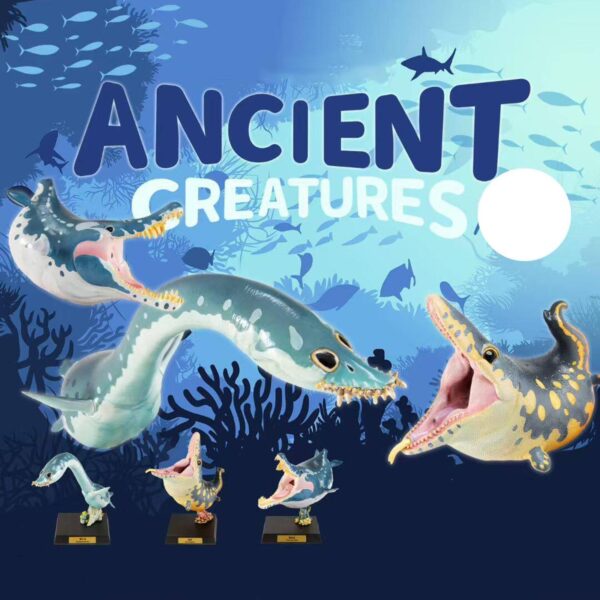
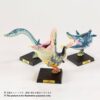
| Line | Ancient Creatures, by Animal Heavenly Body |
| Approx. Size | About 3.1 × 1.8 × 4.3 in (8 × 4.5 × 11 cm) |
| Material | Hand-painted resin |
| Display | Single figure — ready to display out of the box |
| SKU | AHB-ANC-05 |
Reviews
There are no reviews yet.